
Skin assessment
Skin assessment and IPL suitability review with skin type classification.
Broad-spectrum pulsed light for sun spots, age spots, rosacea-related redness, post-acne marks, and skin rejuvenation.
Intense Pulsed Light (IPL) uses filtered broad-spectrum light (560nm to 1200nm) to selectively target melanin in pigmented lesions and oxyhemoglobin in vascular conditions. At Skin Clinic by Dr. Eram Razzaq, IPL is used for sun spots, freckles, rosacea, facial redness, post-acne erythema, and non-ablative skin rejuvenation — in a course of 4 to 6 sessions with minimal downtime.
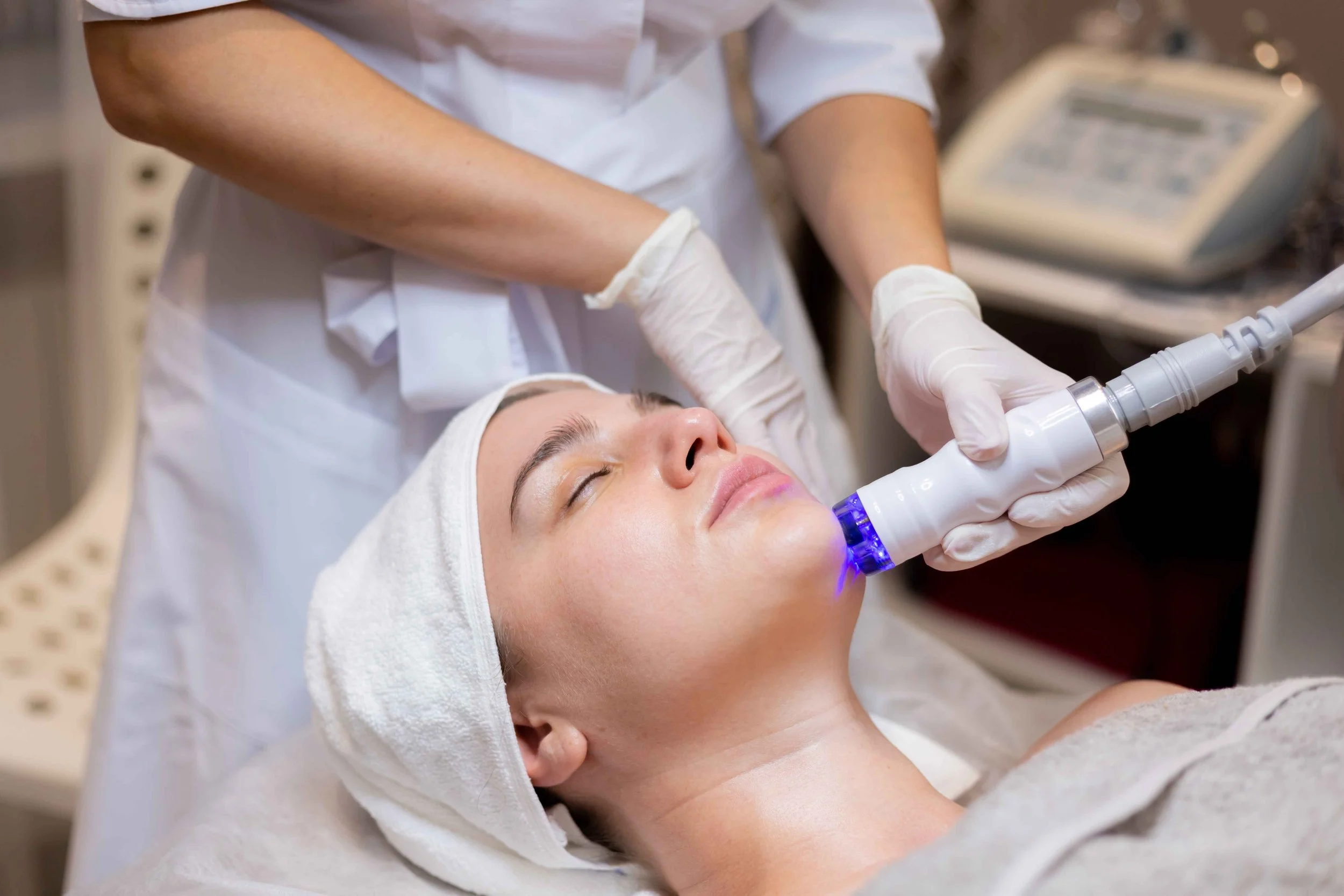
Intense Pulsed Light (IPL) delivers high-intensity filtered light pulses that selectively target chromophores — melanin in brown spots and oxyhemoglobin in red lesions — without damaging surrounding skin. At Skin Clinic by Dr. Eram Razzaq, IPL filter selection and settings are customized to the specific concern: a 560nm filter for vascular and pigment, 590nm for rosacea and redness, and higher wavelengths for hair reduction. IPL is most effective for Fitzpatrick skin types I to III and used with caution in type IV.
Suitability is confirmed after skin examination, medical history, lifestyle review, and realistic expectation setting.
Skin assessment and IPL suitability review with skin type classification.
Eye protection and cooling gel applied to the treatment area.
IPL flashes delivered with calibrated filter and fluence settings across the target area.
Post-treatment cooling, SPF 50 application, and home care instructions.
A clear appointment pathway helps you understand assessment, procedure planning, recovery guidance, and follow-up before booking.
Skin assessment and IPL suitability review with skin type classification.
Eye protection and cooling gel applied to the treatment area.
IPL flashes delivered with calibrated filter and fluence settings across the target area.
Post-treatment cooling, SPF 50 application, and home care instructions.
Patient feedback focused on consultation quality, comfort, aftercare guidance, and realistic treatment planning.

“Very smooth consultation. Dr. Eram explained why ipl treatment was suitable and what I should expect after the session.”
“I was nervous before visiting, but the doctor checked my concern carefully, explained the treatment steps, and gave simple aftercare instructions. The visit felt organized, clean, and professional.”
“Clear guidance and no rushed treatment.”
“The team guided me about session planning, recovery time, and follow-up. I appreciated the realistic expectations instead of over-promising instant results.”
“My concern was discussed in detail, and the clinic team made the whole process easy to understand from consultation to aftercare.”
These answers are general guidance. Your actual plan depends on examination, skin type, medical history, and treatment suitability.
IPL treats sun spots, freckles, age spots, rosacea-related redness, post-acne erythema, and diffuse photodamage.
Most patients need 4 to 6 sessions spaced 3 to 4 weeks apart for optimal results.
IPL is safest for Fitzpatrick skin types I to III. Type IV requires careful settings and assessment. Types V and VI are generally not suitable.
A snapping or heat sensation is felt with each light pulse. Most patients tolerate it without anaesthesia.
Spots may temporarily darken to a coffee-ground appearance within 24 to 48 hours then shed naturally over 7 to 10 days.
Yes. IPL effectively reduces the diffuse redness and visible dilated vessels characteristic of rosacea.
Minimal. Redness settles within hours and temporary darkening of spots is typically resolved within a week.
IPL can trigger rebound melasma if used without a correct diagnosis and skin preparation — which is why assessment is essential.
Yes. IPL is commonly used for sun damage and spots on the chest, neck, forearms, and hands.
Yes. Skin tone classification, pigmentation diagnosis, and current medications must all be reviewed before starting.
Share your concern and the clinic team will guide you about appointment availability, suitability review, and the next step with Dr. Eram Razzaq.