
It often begins at the barber shop or while tying your hair: someone notices a smooth, round patch of bare skin on the scalp. The skin looks completely normal, not red, not scaly, but the hair in that one spot is simply gone. It is a frightening thing to discover.
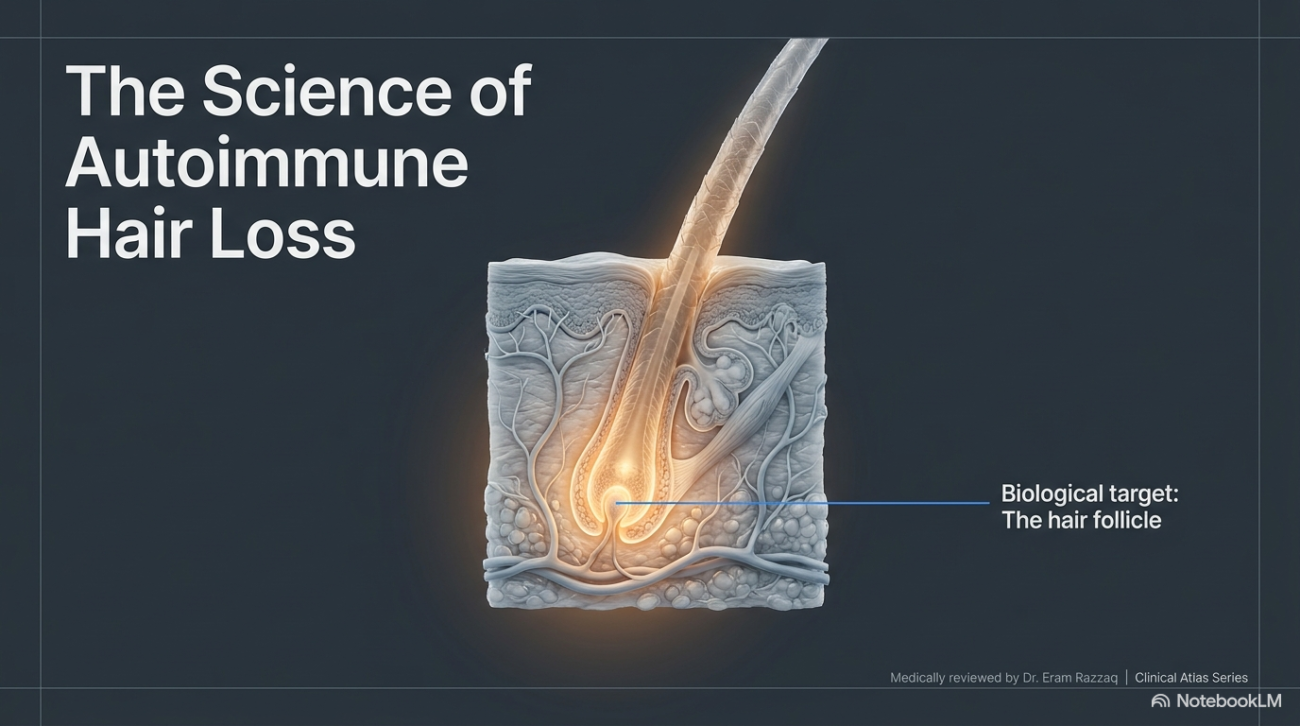
The usual cause is alopecia areata, an autoimmune condition in which the body’s own defence system mistakenly attacks hair follicles. It is common, it is not contagious, and in many cases the hair grows back.
This article explains why it happens, the course it can take, the treatments that genuinely help, and why the emotional side deserves as much care as the medical one.
What Is Alopecia Areata?
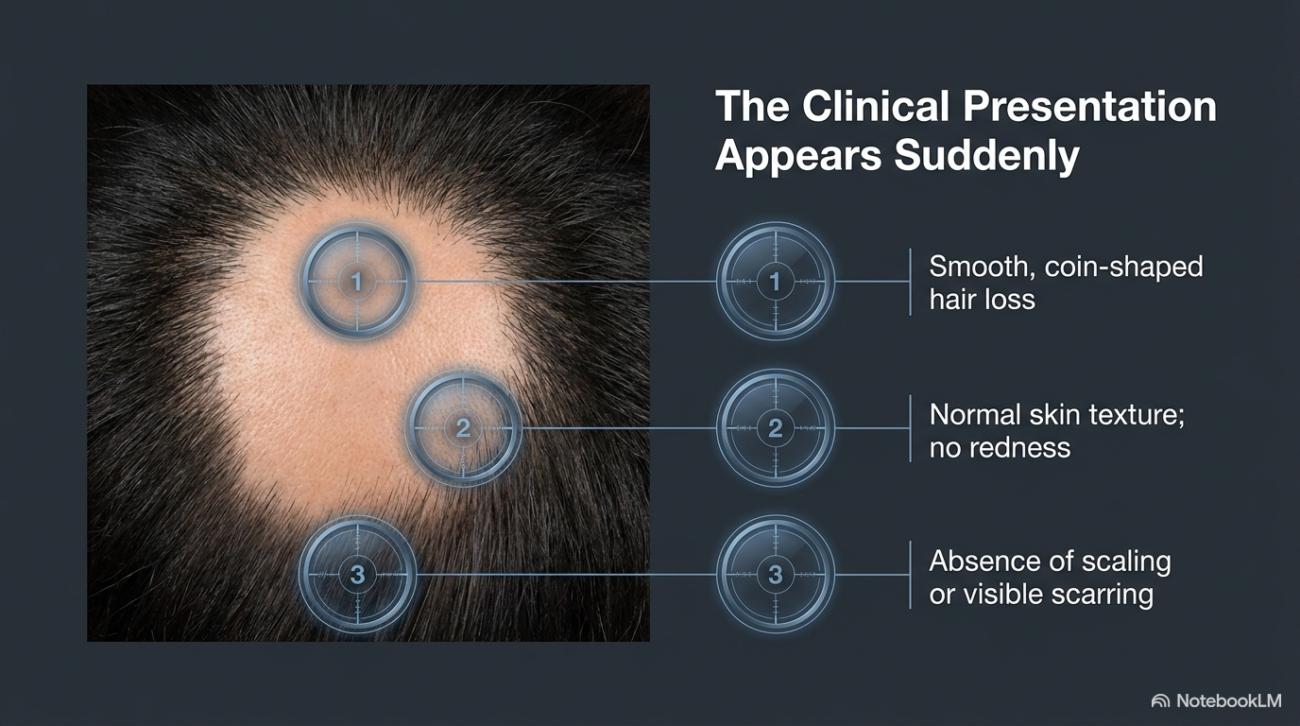
Alopecia areata happens when immune cells, which normally defend you against infection, mistake hair follicles for a threat and attack them. The targeted follicles abruptly stop producing hair, and one or more bald patches appear, classically round or oval and about the size of a coin.
The patches feel smooth, with normal skin and no scarring. Around the edges there may be short, broken hairs that are narrower near the skin, which doctors call exclamation mark hairs. Patches can involve the scalp, beard, eyebrows or eyelashes, and some people also develop fine pitting, tiny dents, in their fingernails.
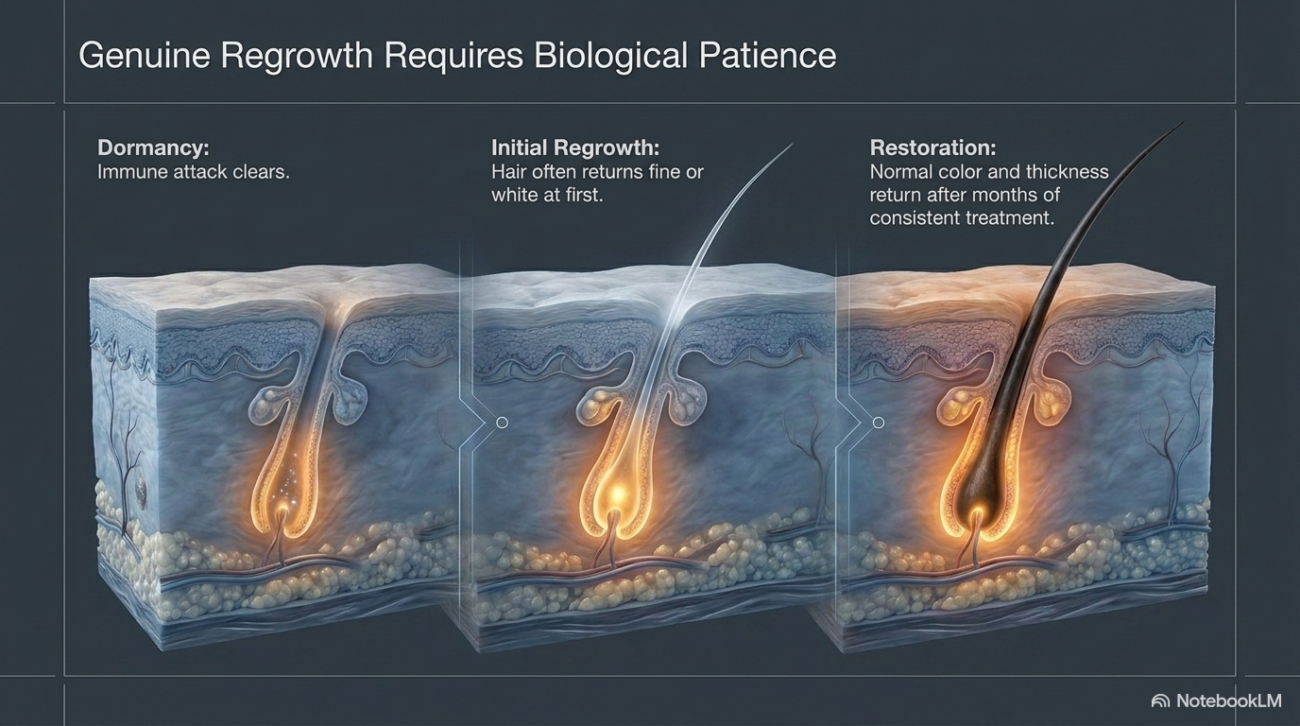
The crucial point is that the follicles are not destroyed. They are suppressed while the immune attack lasts, which is why genuine regrowth remains possible.
What It Is Not
Because sudden bald patches cause alarm, myths gather quickly, so let us be direct. Alopecia areata is not contagious. You cannot catch it from a comb, a barber’s clippers, a towel or another person, and nobody can catch it from you.
It is also not caused by weakness, a poor diet or something you did wrong. It is an autoimmune process influenced by genetics, and it sometimes travels with other autoimmune conditions such as thyroid disease, which is why your dermatologist may suggest a few blood tests. Stressful events may act as a trigger in some people, but stress alone does not explain it, and self-blame helps no one.
An Unpredictable Course
The honest truth about this condition is that its course is difficult to predict. Many people with one or two small patches see full regrowth within months, sometimes even without treatment. New hair may arrive fine or white at first, then regain its normal colour and thickness.
Others develop fresh patches while older ones fill in, and relapses can occur months or years later. In a small number of people the condition becomes extensive, affecting most of the scalp or the body. Because patchy loss can occasionally be confused with fungal infection or other conditions, and hair loss in general has many causes, a confirmed diagnosis matters; our guide to hair loss causes and treatment options gives the wider picture.
Treatment Options: From Injections to Newer Medicines
For limited patches, the usual first-line treatment is intralesional corticosteroid injection: tiny amounts of an anti-inflammatory medicine placed into and around the patch to calm the immune attack. Sessions are repeated every few weeks, and many patches respond over the following months.
Topical options, including prescription steroid creams and minoxidil, can support regrowth and are often preferred for children or for those who would rather avoid needles. For rapidly spreading or extensive disease, dermatologists may consider systemic treatment, meaning medicines that act through the whole body. Newer options in this category have widened what is possible for severe alopecia areata, but they require specialist assessment, monitoring and an honest discussion of benefits and risks.
No single treatment works for everyone, and patience is built into every plan, because regrown hair takes months to become visible.
The Emotional Side Matters
Hair is tied to identity, and patchy loss can shake confidence badly, especially for women and young people. Worry about new patches appearing is common and completely understandable.
Do not face it alone. Talk openly with close family, and let your doctor address your fears as well as your patches. Practical steps help too: hairstyles that cover patches, camouflage fibres or powders, and well-fitted wigs for extensive loss. Clear, honest guidance from an experienced dermatologist such as Dr. Eram Razzaq can turn a frightening unknown into a condition you understand and manage.
Frequently Asked Questions
Is alopecia areata contagious?
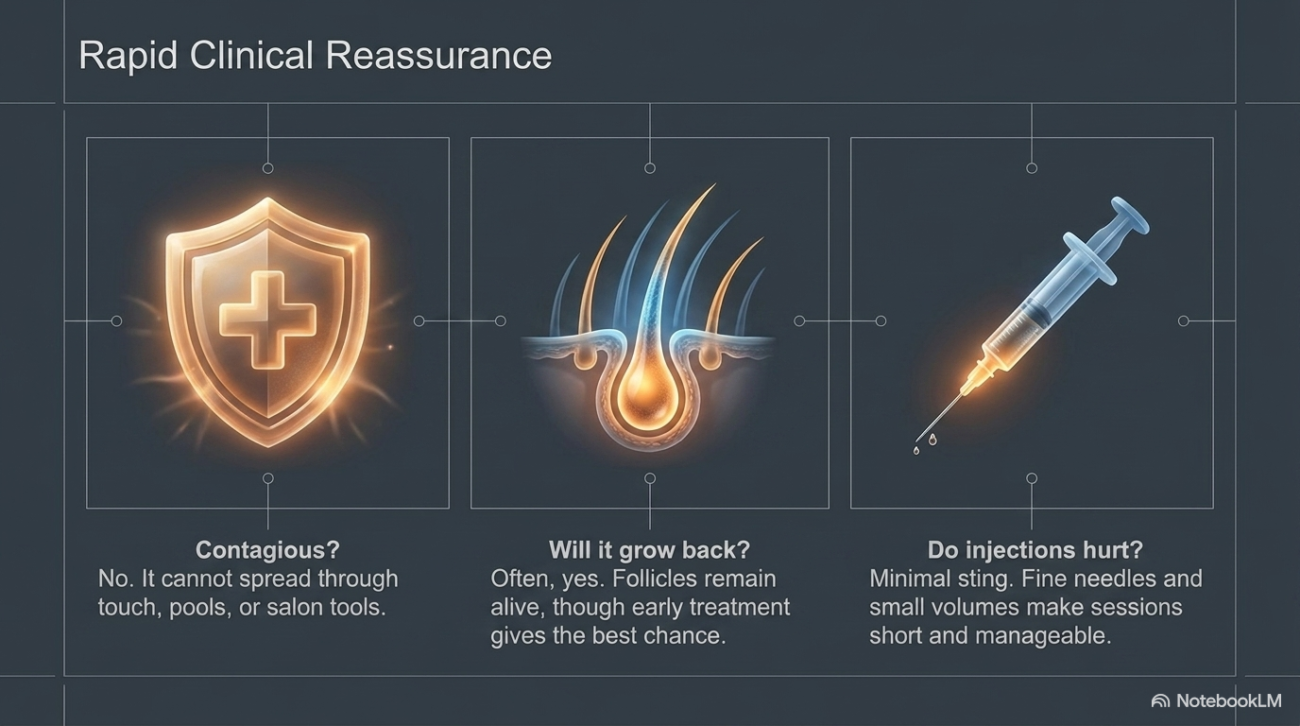
No. It is an autoimmune condition, not an infection, so it cannot spread through combs, towels, salon tools or touch. There is no medical reason to avoid barbers, swimming pools or physical contact, and family members are not at risk of catching it.
Will my hair grow back?
Often, yes, particularly when patches are few and small, because the follicles remain alive. Regrowth may start fine or white before returning to normal. The course does vary, though, and some people relapse. Early treatment and regular follow-up give the best chance, but no honest clinic guarantees regrowth.
Do the scalp injections hurt?
Each tiny injection stings briefly, but the needles are fine, the volumes are small and a session is short. Most adults manage them comfortably. For children or very sensitive patients, numbing cream and topical treatments are reasonable alternatives to discuss.
When to See a Dermatologist
See a dermatologist promptly for any new bald patch, especially one that is smooth and expanding, for multiplying patches, or for loss involving the eyebrows, lashes or beard. An early, confirmed diagnosis rules out look-alike conditions, opens up treatment options and shortens the anxious guessing.
At Skin Clinic in Bahria Town, Lahore, Dr. Eram Razzaq assesses and treats alopecia areata with a clear plan and proper follow-up. Call 0304-1115000 or book a consultation; bring your questions, and bring a family member along if that makes it easier.
This article is for general information only and is not a substitute for a professional medical diagnosis. If you have a persistent skin or hair concern, please consult a qualified dermatologist.