
You brush the flakes off your shoulders, switch to yet another anti-dandruff shampoo, and two weeks later the white specks are back. If that cycle sounds familiar, you are in good company – stubborn flaking is one of the most common scalp complaints we hear at our clinic in Lahore, especially once winter sets in.
Here is the part most people miss: not all flakes are dandruff. Simple dry scalp, seborrheic dermatitis and scalp psoriasis can look similar at first glance, yet each one needs a different plan. Using the wrong dandruff treatment for months is the single biggest reason flakes keep returning.
In this guide, you will learn how to tell the three conditions apart, how to use medicated shampoos so they actually work, and when persistent flaking deserves a dermatologist’s opinion rather than another trip to the supermarket shelf.
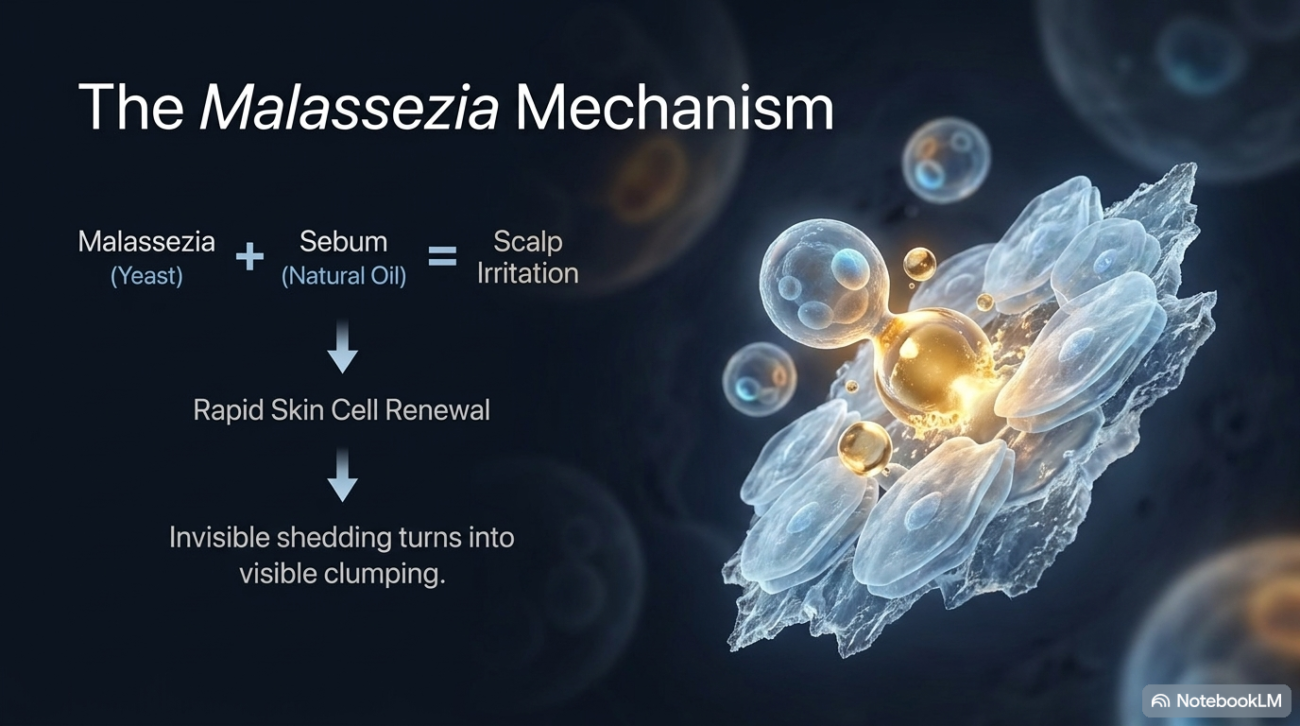
What Causes Dandruff? The Role of Malassezia Yeast
Everyone’s scalp is home to a yeast called Malassezia – a type of fungus that feeds on sebum, the natural oil your scalp produces. In most people, it causes no trouble at all. In others, the substances it releases irritate the scalp and push skin cells to renew far faster than normal.
Instead of shedding invisibly, those cells clump together and fall away as visible flakes. This is why dandruff is not a hygiene problem. An oily scalp simply gives the yeast more food, which is also why effective dandruff treatment targets the yeast and the oil, not just the flakes you can see.
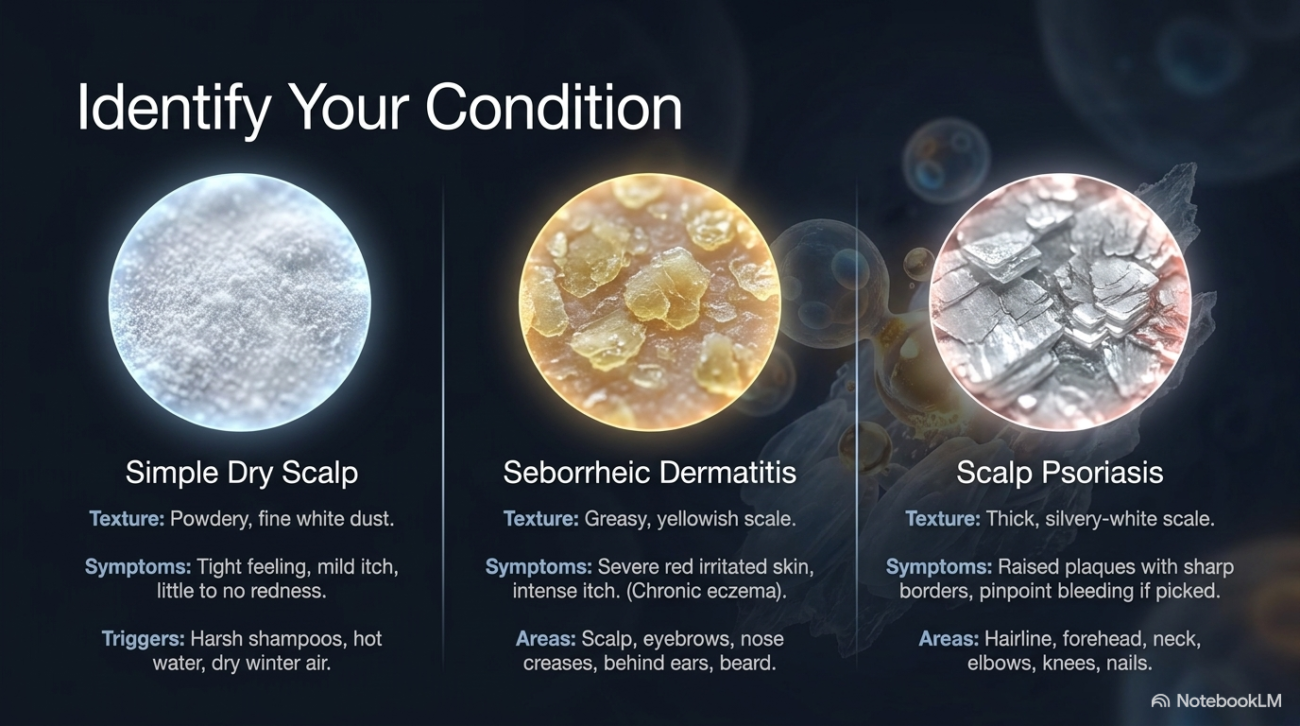
Dry Scalp vs. Seborrheic Dermatitis vs. Psoriasis
Simple dry scalp
Dry scalp produces fine, white, powdery flakes with little or no redness. The scalp feels tight and mildly itchy. Common triggers are harsh shampoos, very hot water and dry winter air. A gentler shampoo and lukewarm washing often settle it within weeks.
Seborrheic dermatitis
Seborrheic dermatitis is the severe cousin of dandruff and a chronic form of eczema. The scale is greasy and yellowish, and it sits on skin that is clearly red and irritated. It favours oily areas: the scalp, eyebrows, the creases beside the nose, behind the ears and the beard. Itching is usually more intense than with ordinary dandruff.
Scalp psoriasis
Psoriasis produces thick, silvery-white scale on well-defined, raised plaques – patches with sharp borders you can feel with a fingertip. Plaques often extend beyond the hairline onto the forehead, neck or around the ears, and picking the scale may cause pinpoint bleeding. Many patients also have patches on the elbows, knees or nails. You can read more in our detailed guide to understanding psoriasis.
Dandruff Treatment: How to Use Medicated Shampoos Properly
Most people who say a medicated shampoo “did not work” were using it like an ordinary shampoo – a quick lather, an instant rinse. Anti-dandruff actives such as ketoconazole (an antifungal), zinc pyrithione, selenium sulfide, salicylic acid (which loosens scale) and coal tar need contact time with the scalp to do their job.
- Massage the shampoo into the scalp itself, not just the hair lengths.
- Leave the lather on for a full five minutes – time it – before rinsing.
- Use it two to three times a week at first, then once weekly to maintain control.
- Rotate between two different actives if one seems to lose effect over time.
- Apply conditioner only to the mid-lengths and ends, never the scalp.
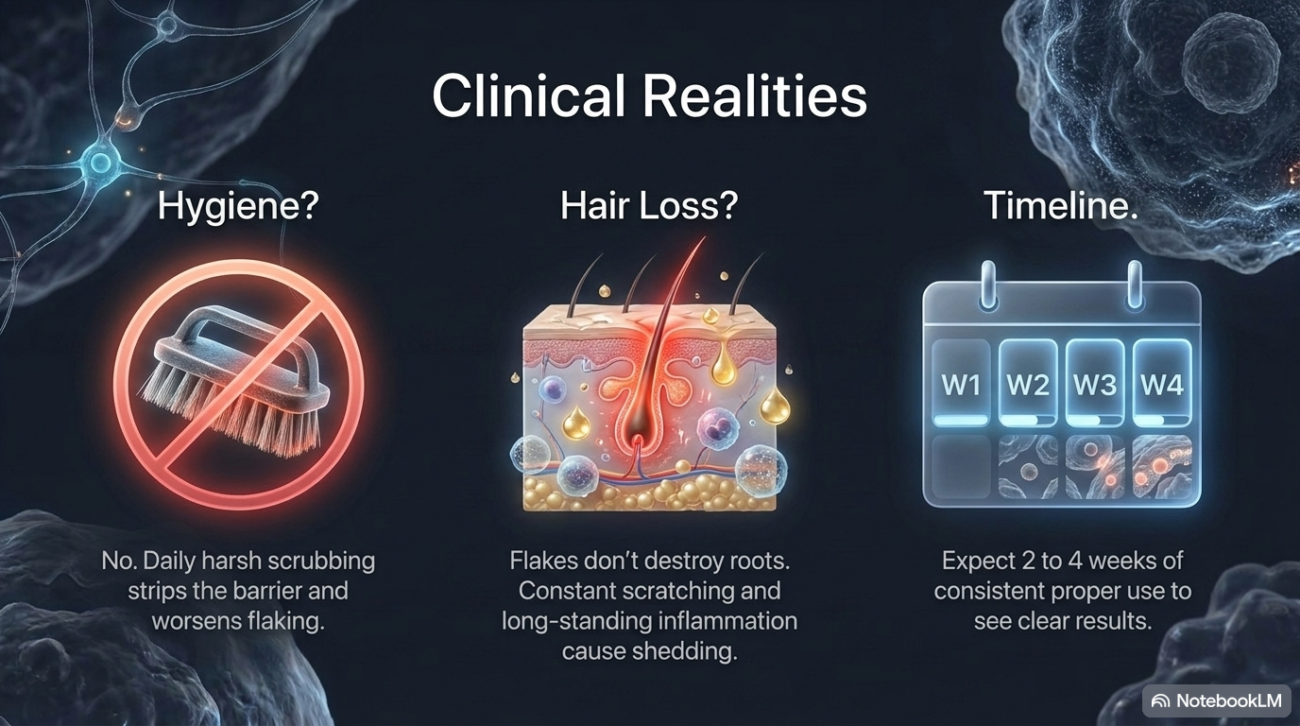
Used this way, dandruff treatment typically shows clear improvement within two to four weeks. Because Malassezia is a permanent resident of the scalp, ongoing maintenance washes matter more than any single product.
Why Flaking Gets Worse in Winter
Many patients in Lahore notice their scalp behaves through summer and erupts from November onward. Cold, dry air and indoor heating strip moisture from the skin, while hot showers and woolly caps irritate it further. People also tend to wash their hair less often in winter, letting oil and yeast build up between washes.
The fix is not complicated: keep your medicated wash schedule steady through winter, use lukewarm rather than hot water, and resist scratching, which damages the scalp barrier and invites more inflammation.
A Warning About Steroid-Mix Creams
In many Pakistani pharmacies you can buy combination creams and lotions containing potent steroids without any prescription. They calm redness and itch impressively fast, which is exactly why they are risky: the problem rebounds worse when you stop, and long-term use thins the skin and can trigger acne-like eruptions and other side effects.
Steroid lotions do have a place in dandruff treatment – particularly for seborrheic dermatitis and psoriasis – but only in the right strength, for a limited time, under a doctor’s supervision. Please do not self-treat a flaking scalp with an unlabelled mix cream from the counter.
Frequently Asked Questions
Is dandruff caused by poor hygiene?
No. Dandruff comes from the interaction between Malassezia yeast, scalp oil and your individual skin response, not from being unclean. In fact, scrubbing daily with a harsh shampoo can dry and irritate the scalp and make flaking look worse.
Can dandruff cause hair loss?
Dandruff itself does not destroy hair roots, but constant scratching and long-standing inflammation can increase daily shedding. Once the scalp is treated and calm, shedding usually settles. If hair fall continues, it deserves its own assessment by a dermatologist.
How long does dandruff treatment take to work?
With correct technique, most people notice fewer flakes and less itch within two to four weeks. If there is no real change after a month of proper use – or the scale is thick, red or spreading – the diagnosis needs a second look.
When to See a Dermatologist
See a dermatologist if flakes persist despite four to six weeks of proper medicated shampoo use, if the scalp is red, weepy or painful, if you can feel thick raised plaques, if itching disturbs your sleep, or if the rash spreads to the face, ears or chest. Persistent “dandruff” often turns out to be seborrheic dermatitis or psoriasis – both very manageable once diagnosed, with prescription antifungals, correctly used steroid lotions and other targeted options.
If your scalp is not settling, Dr. Eram Razzaq brings more than 15 years of dermatology experience to diagnosing exactly what your flakes are. Visit Skin Clinic at 48/38 Quaid Commercial, Sector E, Bahria Town, Lahore, call 0304-1115000, or book a consultation online. A precise diagnosis is the shortest route to a clear, comfortable scalp.
This article is for general information only and is not a substitute for a professional medical diagnosis. If you have a persistent skin or hair concern, please consult a qualified dermatologist.