Have you started noticing more forehead in the mirror, or a parting that looks wider than it did in old photographs? If thinning runs in your family, you may be wondering whether the same story is now beginning on your own scalp.
The most common cause of gradual thinning in both men and women is androgenetic alopecia, better known as pattern hair loss. It is driven by hormones and genetics, it follows predictable shapes, and it responds far better to early treatment than to late rescue attempts.
This article explains the science in plain words: what actually shrinks the hair, how the male and female patterns differ, and which treatments have genuine evidence behind them.
What Causes Pattern Hair Loss?
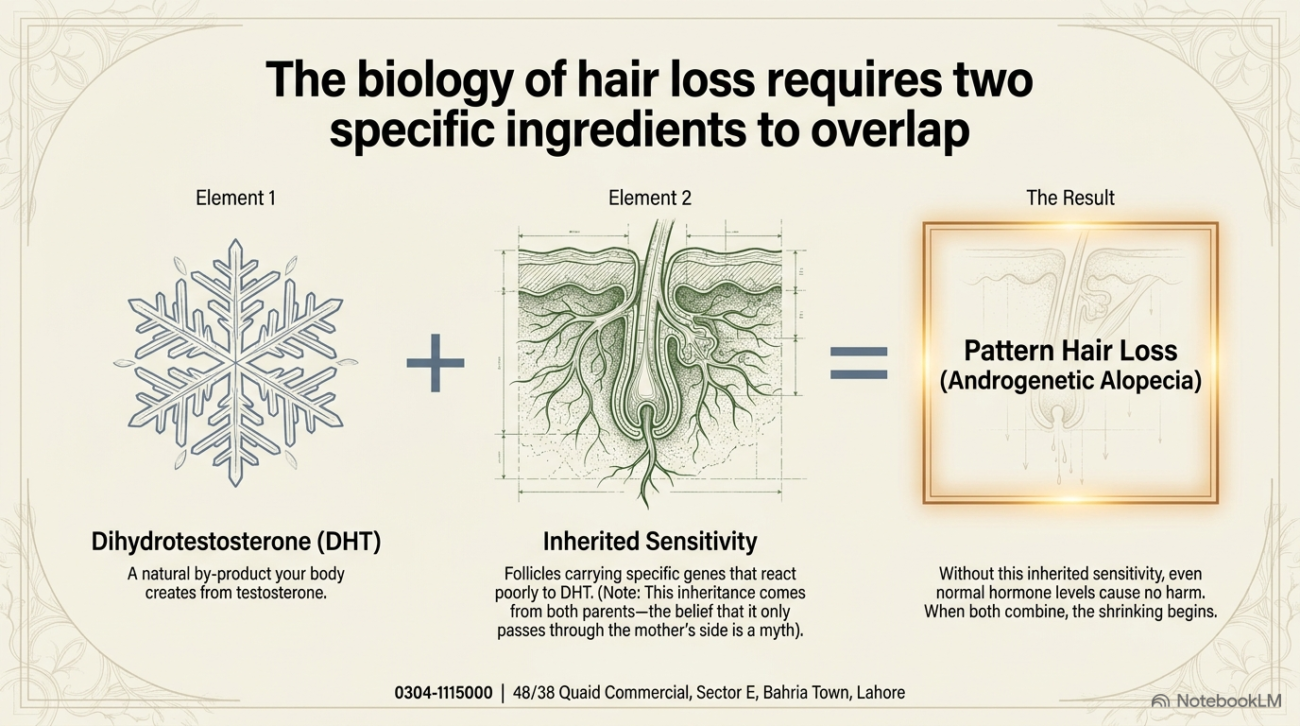
Two ingredients have to come together. The first is dihydrotestosterone, or DHT, a by-product your body makes from testosterone. The second is inherited sensitivity: some people’s follicles carry genes that make them react badly to DHT. Without that sensitivity, even normal hormone levels cause no harm.
In sensitive follicles, DHT slowly shrinks the hair root with every growth cycle. Dermatologists call this miniaturization. Each new hair emerges slightly finer, shorter and lighter than the one before, until some follicles produce only soft fuzz and finally nothing at all.
This explains two things patients often ask about. The loss is gradual, because the downgrading takes years. And it can come from either side of the family; the old belief that baldness passes only through the mother’s side is a myth, as genes from both parents contribute.
Male Pattern vs Female Pattern: Two Different Maps
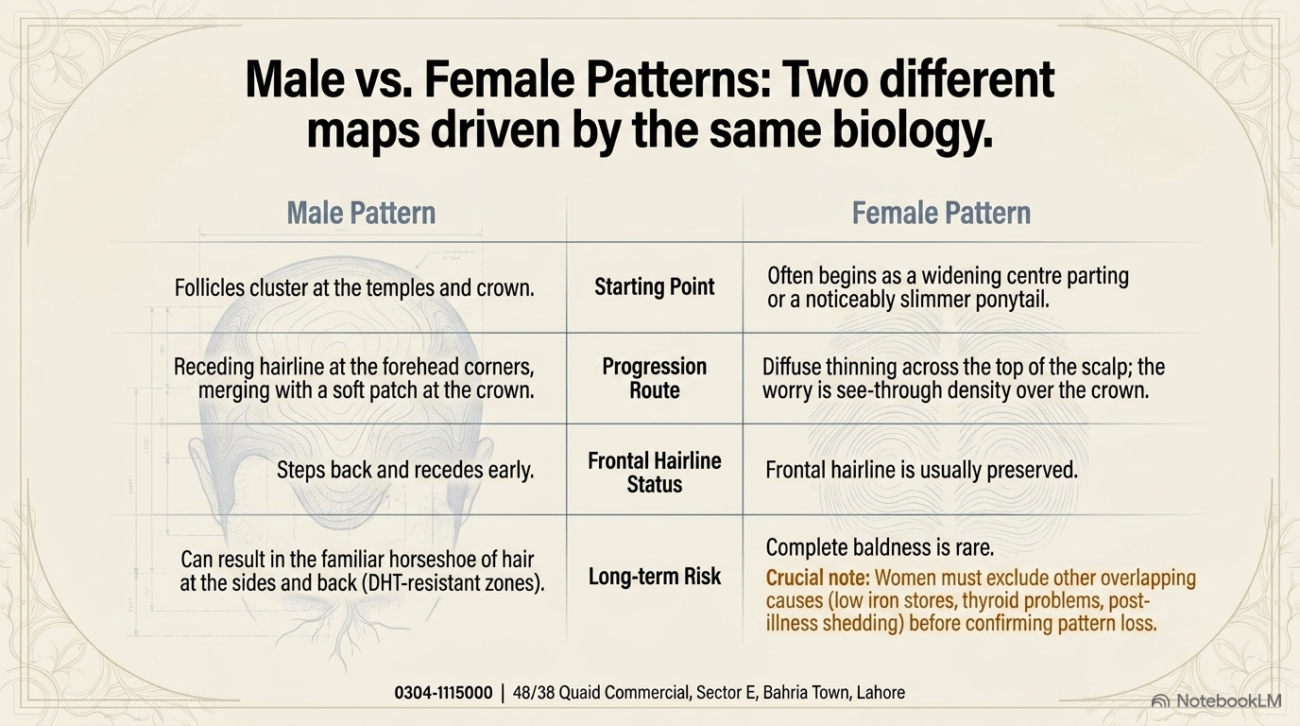
In men, the DHT-sensitive follicles cluster at the temples and the crown. Thinning typically begins with a receding hairline at the corners of the forehead, followed by a soft patch at the crown. Over years the two zones can merge, leaving the familiar horseshoe of hair at the sides and back, where follicles are naturally resistant to DHT.
In women, the frontal hairline is usually preserved. Instead, the hair over the top of the scalp thins diffusely, and the earliest sign is often a widening centre parting or a ponytail that feels noticeably slimmer. Complete baldness is rare in women; the worry is usually see-through density over the crown.
Female thinning also overlaps with other causes, such as low iron stores, thyroid problems and heavy shedding after illness or childbirth, so women especially benefit from a confirmed diagnosis before starting treatment. Our guide to hair loss causes and treatment options covers the wider picture.
Why Early Treatment Preserves More Hair
There is one honest rule in managing pattern hair loss: keeping a hair is far easier than regrowing one. Treatments work best on follicles that are shrinking but still alive. Once a follicle has fully miniaturized and closed down, no cream or tablet reliably revives it.
Acting early does not mean panicking over normal daily shedding; everyone loses some hairs each day. It means seeking an assessment when you notice a consistent change over months: a wider parting, a stepping-back hairline, or a crown that shows more scalp in photographs. The earlier treatment begins, the more of your existing density it can protect.
Treatments With Real Evidence
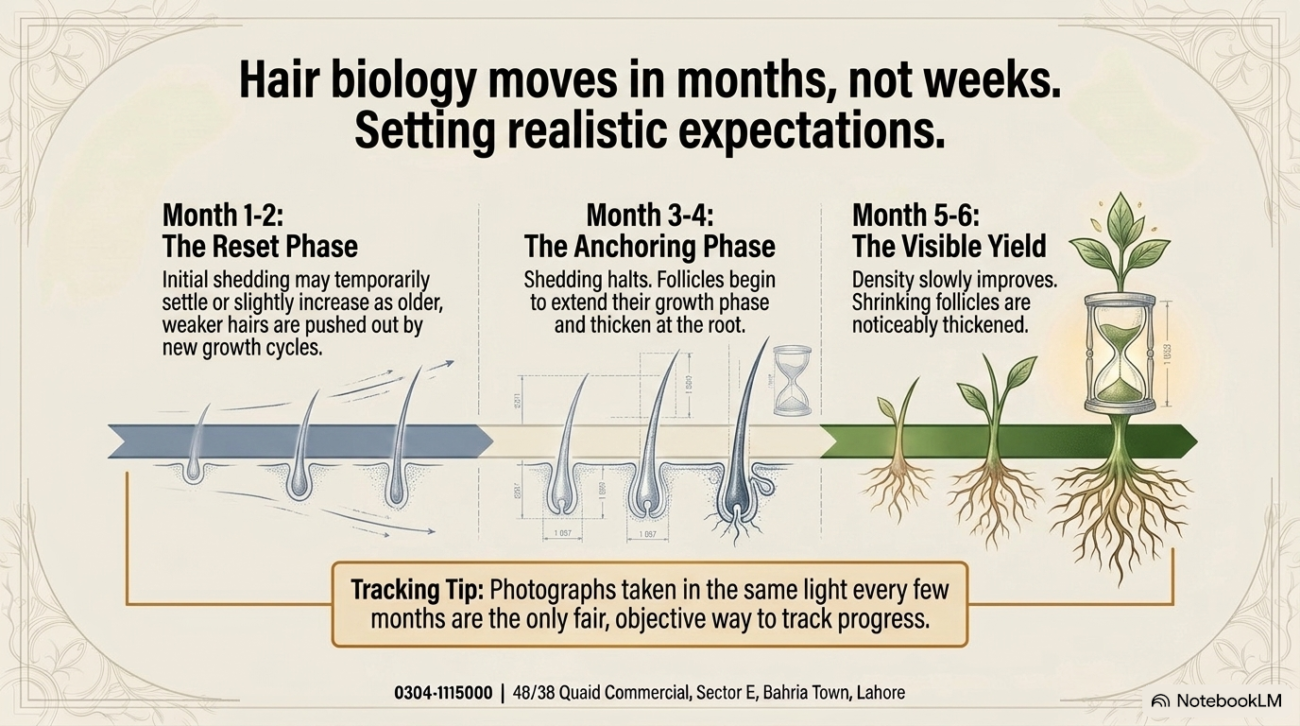
Minoxidil, applied to the scalp, is usually the first step for both men and women. It improves blood flow around the follicle and extends the growth phase, so hairs grow thicker and stay longer. It needs daily, ongoing use, and visible results typically take three to six months.
Anti-androgen medicines address the hormonal driver itself. In men, prescription tablets can lower DHT; in women, different anti-androgen options are considered, usually after blood tests exclude other causes. These medicines can be very effective, but they must be doctor-supervised, because suitability, dosing and side effects vary from person to person.
Platelet-rich plasma is a useful add-on rather than a replacement. It uses growth factors from your own blood to stimulate weakening follicles, and many patients combine it with medical treatment for a stronger overall response. You can read how it works on our PRP therapy for face and scalp page.
What Does Not Work
It is equally important to know where not to spend your money. Oils, however soothing the massage, do not alter DHT and do not revive miniaturizing follicles. Most supplements only help when a genuine deficiency exists; with normal blood levels, extra vitamins do not produce extra hair.
Be wary of anything promising regrowth in a few weeks. Hair biology moves in months, and honest treatments are judged over months. Pattern hair loss can be slowed and partly reversed, but only with methods that address hormones, follicle health or both.
Frequently Asked Questions
Is pattern hair loss reversible?
Partly, and the stage matters. Follicles that are shrinking can often be thickened again, which is why early cases respond best. Areas that have been smooth and bald for years usually cannot be revived with medicines; for those, procedures such as transplantation are discussed instead.
Does wearing a cap cause baldness?
No. Caps and helmets do not cause the patterned miniaturization of androgenetic alopecia, which is hormonal and genetic. A very tight cap worn for long hours could cause some friction breakage at most, and that recovers once the friction stops.
How soon will treatment show results?
Give any evidence-based treatment at least three to six months before judging it. Shedding usually settles first, then density slowly improves. Photographs taken in the same light every few months are the fairest way to track your progress.
When to See a Dermatologist
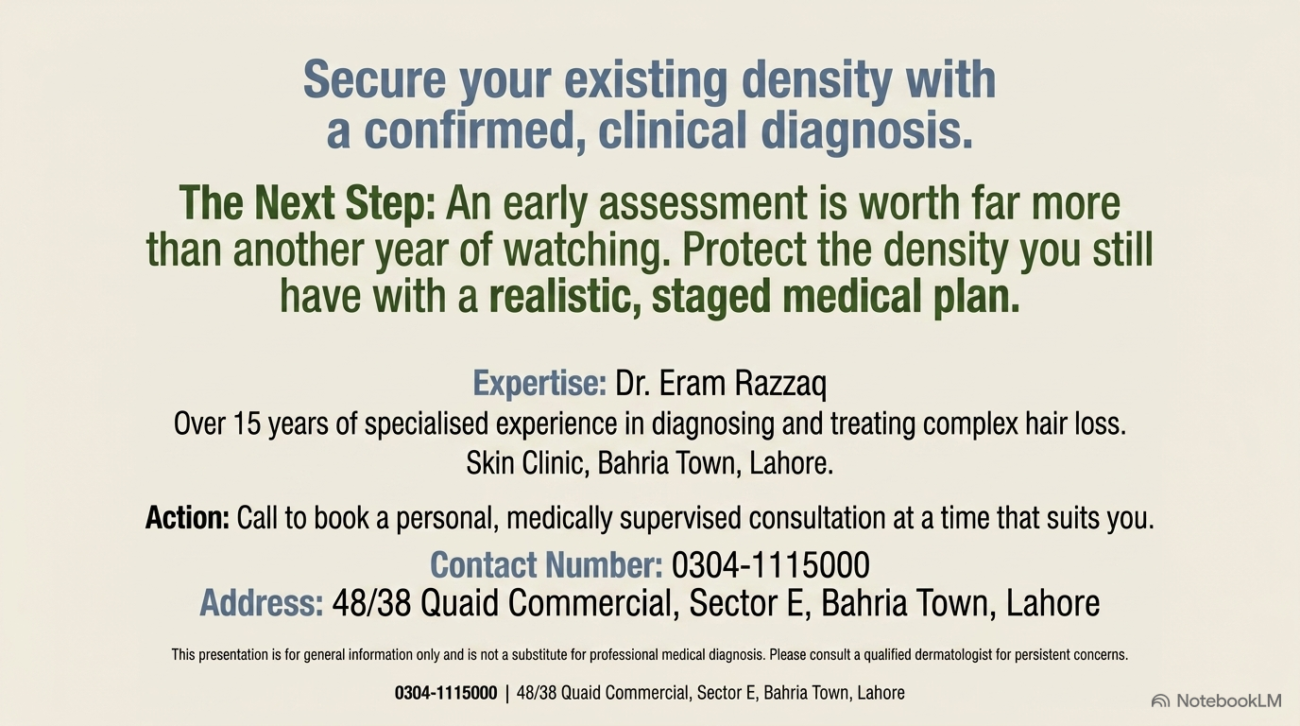
If your parting keeps widening, your hairline is stepping back, or your crown thins steadily, an early assessment is worth far more than another year of watching. A dermatologist can confirm whether this is pattern hair loss or something else entirely, and help you protect the density you still have.
Dr. Eram Razzaq at Skin Clinic, Bahria Town, Lahore has more than 15 years of experience in diagnosing and treating hair loss. If you would like a personal assessment and a realistic, staged plan, call 0304-1115000 or book a consultation at a time that suits you.
This article is for general information only and is not a substitute for a professional medical diagnosis. If you have a persistent skin or hair concern, please consult a qualified dermatologist.